
Ureteral Stones Treatment in Delhi
Understanding and Treating Kidney Stones in the Ureters
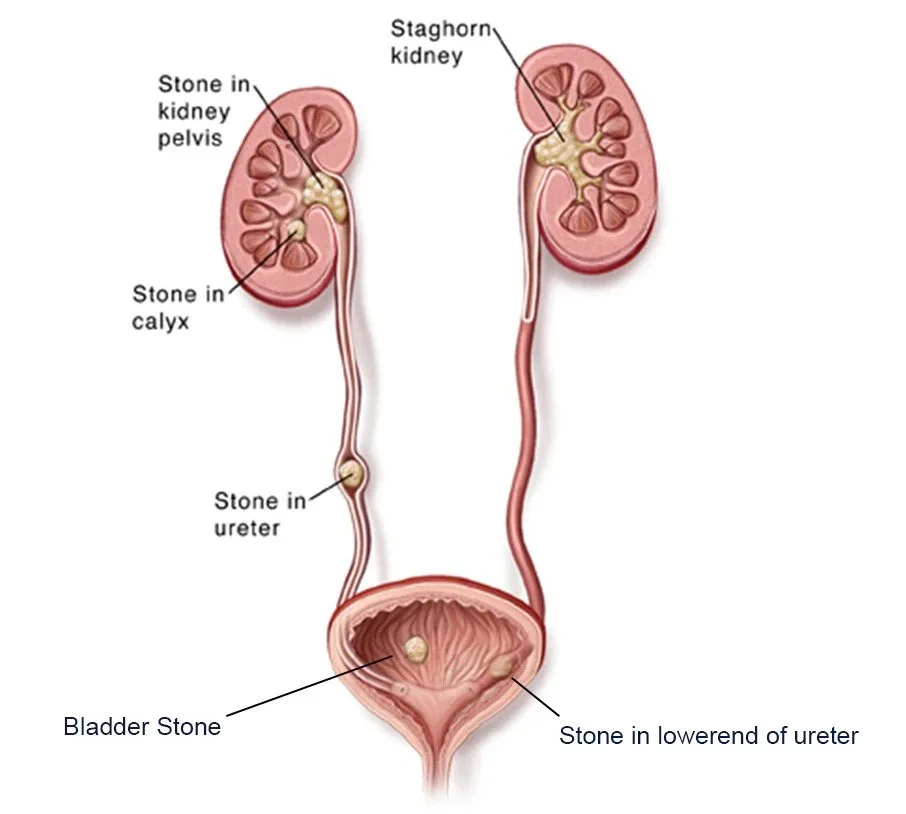
Illustration showing ureteral stone formation and location
What Is a Ureteral Stone?
A ureteral stone is a kidney stone that's stuck in one of your ureters ("yer-it-ters"). These are the muscle tubes that connect your kidneys to your urinary bladder. Ureters can be 10 to 12 inches long, depending on your height. Most of us have one ureter for each kidney.
A ureteral ("yer-ree-ter-uhl") stone or calculus is an irregularly shaped solid mass of crystals, minerals and salts that build up in your pee. Some stones can block the flow of pee and cause severe pain.
Stones may show up near the end of the ureter that connects to your renal pelvis. There's a renal pelvis in the center of each of your kidneys, and it collects pee. Stones may also be in the middle or end of the ureter that connects to your bladder.
Size Matters: Ureteral stones can vary in size. When they're tiny (too small to see with the naked eye), they pass through your pee and don't cause any problems. The larger the stones, the lower the chance of them passing on their own, and the greater the chance you'll have symptoms.
Types of ureteral stones
Calcium stones
These are the most common type of ureteral calculus. Types of calcium stones include calcium oxalate stones and calcium phosphate stones.
Uric acid stones
Uric acid stones form when there's too much uric acid in your pee.
Struvite stones
Struvite stones sometimes form after you've had a urinary tract infection (UTI). Magnesium ammonium phosphate (struvite) and calcium carbon-apatite make up most of a struvite stone.
Cystine stones
The genetic disorder cystinuria ("sis-tah-nuhr-ee-ah") causes cystine stones. Cystinuria makes the amino acid cystine leak out of your kidneys and into your pee.
Symptoms of a ureteral stone
Tiny ureteral calculi may pass through your urinary system on their own without any symptoms. But stones that block your ureters or any of your kidneys' drainage tubes may cause problems.
Symptoms of a ureteral calculus include:
- Severe pain that comes and goes in your back or side (under your lower ribs)
- Pain that spreads (radiates) to your lower belly
- Pain or a burning feeling while peeing
- Nausea and vomiting
- Bloody or discolored pee (brown, pink or red)
- Cloudy pee
- Frequent urges to pee
- Only a small amount of pee when you go
Additional Warning: You also may have a fever, chills or an unwell feeling when you have a urinary tract infection along with the passage of stones.
Diagnosis and Tests
How doctors diagnose a ureteral stone
A healthcare provider will ask about your symptoms, previous history of kidney stones and other medical issues. They'll perform a physical exam. They'll also order tests to confirm that you have ureterolithiasis.
Urinalysis
This test will look for signs of infection and measure the amount of substances in your pee that cause ureteral stones. If your provider suspects an infection, they can order a urine culture.
Blood test
This test will reveal how well your kidneys are working, check for infection and look for other problems that may cause ureteral stones.
Ultrasound
This uses sound waves to look for blockages in your ureters.
X-ray of your belly
This may help show whether a stone is in the areas of your kidneys or ureters.
Computed tomography (CT) scan
A CT scan can help your healthcare provider find out your ureteral stone's size, location and hardness. It provides information to help plan treatment.
How do you treat ureteral stones?
Treatment for ureteral calculi depends on the size and location of the stones. It also depends on the substances that make up the stones. The size and location of the stones will help your healthcare provider know if you can expect to pass them.
Important: It can take several weeks for a stone to pass. During that time, you may need medicine for pain and nausea.
Treatment for larger stones or urinary tract blockage:
If you have larger ureteral stones or a urinary tract blockage, a urologist may recommend the following:
Shock wave lithotripsy
High-energy shock (sound) waves break up stones in your ureters. Smaller pieces of stone move through your urinary tract more easily when you pee.
Ureteroscopy
A urologist inserts a long, thin tube with a camera into your urethra (where pee leaves your body). After getting the tube into your ureter, they remove your stone or break it up with a laser.
Percutaneous nephrolithotomy
A urologist inserts a scope directly into your kidney through a small cut (incision) in your back to find and remove your stones. They'll only do this for large stones.
Ureteral stents
Ureteral stents are thin, flexible, temporary tubes that hold your ureters open. They allow pee to flow around a kidney stone that's blocking urine flow. These are very helpful in emergency settings.
Medical expulsive therapy (MET)
MET relaxes your ureter muscles. It works best for treating small ureteral stones near your bladder. Treatments may include alpha-blockers, calcium channel blockers, corticosteroids and phosphodiesterase-5 (PDE5) inhibitors.
Prevention & Management Tips
Stay Hydrated
Drink plenty of water throughout the day to help prevent stone formation and facilitate passage of small stones.
Dietary Considerations
Limit sodium and animal protein intake, and maintain adequate calcium through food sources.
Medication Adherence
Take prescribed medications as directed, especially if you have a history of recurrent stones.
Regular Follow-ups
Keep scheduled appointments with your urologist for monitoring and prevention strategies.
When to Seek Emergency Care
Seek immediate medical attention if you experience: severe pain that doesn't improve with pain medication, fever with chills, persistent nausea and vomiting, or inability to urinate. These could indicate complications such as infection or complete blockage requiring urgent intervention.
Quick Reference: Stone Characteristics
| Stone Type | Characteristics | Common Causes |
|---|---|---|
| Calcium Stones | Most common, hard, visible on X-ray | High calcium in urine, dietary factors |
| Uric Acid Stones | Smooth, yellow/brown, not visible on X-ray | High uric acid, acidic urine |
| Struvite Stones | Large, fast-growing, often staghorn shaped | Urinary tract infections |
| Cystine Stones | Yellow, hexagonal crystals, rare | Genetic disorder (cystinuria) |