
Kidney Stones Treatment in Delhi
Understanding, Prevention, and Treatment of Renal Calculi
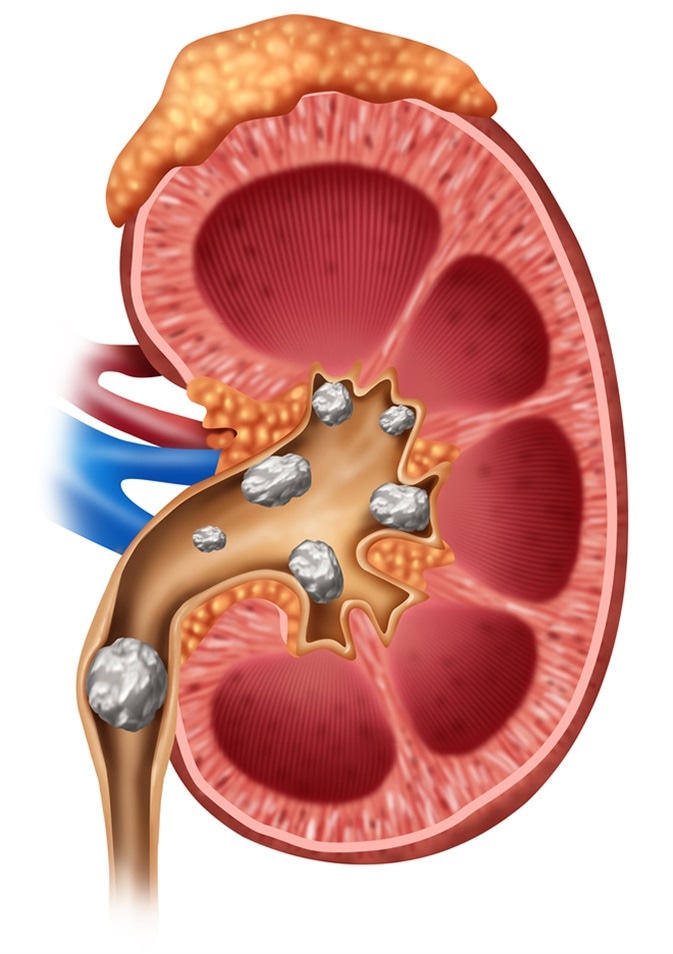
Illustration showing kidney stones formation and location
What are kidney stones?
Kidney stones are solid masses or crystals that form from substances (like minerals, acids and salts) in your kidneys. They can be as small as a grain of sand or — rarely — larger than a golf ball. Kidney stones are also called renal calculi or nephrolithiasis.
Depending on the size of your kidney stone (or stones), you may not even realize that you have one. Smaller stones can pass through your urinary tract in your pee with no symptoms. Large kidney stones can get trapped in your ureter (the tube that drains urine from your kidney down to your bladder). This can cause pee to back up and limit your kidney's ability to filter waste from your body. It can also cause bleeding.
What are the symptoms of kidney stones?
The most common symptom of kidney stones is pain in your lower back, belly or side (flank pain). It might feel like it extends from your groin to your side. It can be a dull pain or sharp and severe. It's sometimes called colicky pain because it can get worse in waves.
Other kidney stone symptoms include:
- Nausea and vomiting
- Bloody pee
- Pain when you pee
- Inability to pee
- Feeling the urge to pee a lot
- Fever or chills
- Cloudy or foul-smelling pee
Note: Smaller kidney stones may not cause pain or other symptoms.
What causes kidney stones?
Your pee contains minerals, acids and other substances, like calcium, sodium, oxalate and uric acid. When you have too many particles of these substances in your pee and too little liquid, they can start to stick together, forming crystals or stones. Kidney stones can form over months or years.
Types of kidney stones
Stones are named for the type of crystals they're made up of:
Calcium-oxalate and calcium phosphate stones
Calcium-based stones can form when you eat high-oxalate or low-calcium foods and aren't drinking enough fluids. Calcium-oxalate stones are the most common type of kidney stones.
Uric acid stones
Eating animal proteins (beef, poultry, pork, eggs and fish) can cause uric acid stones to form.
Struvite stones
Bacterial infections can cause struvite stones. Repeated infections can lead to a staghorn calculus, a very large kidney stone that usually needs to be surgically removed.
Cystine stones
An inherited condition called cystinuria causes cystine stones. Cystine is a substance made of two cysteine amino acids bound together.
What are the risk factors for kidney stones?
You might be at a higher risk of developing kidney stones if you:
Medical conditions that increase kidney stone risk
Certain health conditions can put you at a higher risk for kidney stones. These include:
What are the complications of kidney stones?
Kidney stones can put you at risk for:
A blockage that backs pee up into your kidney
Causing it to swell (hydronephrosis)
Kidney infection (pyelonephritis)
Serious infection requiring medical treatment
Acute kidney injury
A type of kidney failure that can be reversible
Frequent urinary tract infections (UTIs)
Recurrent infections due to obstruction
Chronic kidney disease (CKD)
Long-term damage to kidney function
Diagnosis and Tests
How are kidney stones diagnosed?
Healthcare providers use imaging, blood and urine (pee) tests to diagnose kidney stones. If your provider suspects you have a kidney stone based on your symptoms and physical exam, you may need one or more of these tests:
Urine test
A provider can test your pee for blood, stone-forming crystals and signs of infection.
Imaging
X-rays, CT scans (computed tomography scans) and ultrasound can help your healthcare provider see the size, shape, location and number of stones.
Blood tests
A provider can use blood tests to check your kidney function, detect infections and look for high levels of calcium or other conditions that could lead to stone formation.
Can kidney stones be prevented?
The things you eat and drink can impact your risk for kidney stones. Talk to your healthcare provider or dietitian about ways that you can reduce your risk. They might recommend:
Important Note: If you have calcium oxalate stones, your provider might recommend you avoid foods like spinach, rhubarb, wheat bran, tree nuts and peanuts. While it may not seem like it, foods high in calcium can help prevent kidney stones. The same isn't true for calcium supplements or antacids with calcium, which can increase your risk for stones.