
Kidney Stone Assessment & Prevention in Delhi
Advanced evaluation and personalized strategies to prevent future kidney stone formation
Comprehensive Stone Assessment & Prevention
At BLK Max Hospital, led by Dr. Shafiq Ahmed, we believe that prevention is better than cure. Once you've experienced kidney stones, the risk of recurrence can be as high as 50% within 5-10 years. Our comprehensive stone assessment and evaluation program is designed to identify the underlying causes of stone formation and implement effective strategies to prevent future occurrences.
Why Stone Prevention is Critical
Kidney stones are not just a one-time problem. Without proper preventive measures, 50-60% of patients will experience recurrent stone formation within 10 years. Each episode of stone disease carries risks of kidney damage, infections, emergency room visits, and missed work.
Our preventive approach focuses on identifying the root causes of stone formation rather than just treating the symptoms. By understanding your individual metabolic profile, genetic predispositions, and lifestyle factors, we can create targeted interventions that significantly reduce your risk of future stone formation.
Prevention is particularly important for patients with recurrent stones, family history of stone disease, chronic kidney disease, or those with occupational restrictions (pilots, military personnel, etc.).
Recurrence Statistics Without Prevention
Comprehensive Stone Assessment Protocol
Our systematic evaluation identifies all factors contributing to stone formation
Clinical History Analysis
Detailed review of medical history, diet, lifestyle, and family history
- Medical history
- Dietary assessment
- Family history
- Medication review
Imaging Studies
Advanced imaging to assess current stones and kidney anatomy
- CT scan
- Ultrasound
- X-ray KUB
- IVP if needed
Blood Chemistry Panel
Comprehensive metabolic profile assessment
- Serum creatinine
- Calcium
- Uric acid
- Electrolytes
- Parathyroid hormone
24-Hour Urine Analysis
Gold standard for metabolic stone evaluation
- Volume
- pH
- Calcium
- Oxalate
- Citrate
- Uric acid
- Sodium
Stone Composition Analysis
Fourier-transform infrared spectroscopy (FTIR) of passed stones
- Stone composition
- Crystalline structure
- Mineral content
Genetic Testing
For patients with strong family history or recurrent stones
- Genetic markers
- Inherited disorders
- Metabolic syndromes
Risk Stratification
Comprehensive risk assessment and classification
- Risk scoring
- Classification
- Prognostic assessment
Personalized Plan
Development of customized prevention strategy
- Diet plan
- Medication plan
- Lifestyle changes
- Follow-up schedule
Detailed Metabolic Evaluation Components
24-Hour Urine Collection
CriticalThe cornerstone of metabolic evaluation for stone prevention
- Volume: Target >2.5L/day
- pH: Optimal 6.0-6.5
- Calcium: <250mg/day (men), <200mg/day (women)
- Oxalate: <40mg/day
- Citrate: >450mg/day (men), >550mg/day (women)
- Uric acid: <800mg/day
Blood Chemistry Analysis
EssentialIdentifies systemic metabolic abnormalities
- Serum creatinine: Kidney function assessment
- Calcium: Hyperparathyroidism screening
- Uric acid: Gout and uric acid stone risk
- Electrolytes: Acid-base balance
- Parathyroid hormone: Bone metabolism
- Vitamin D: Calcium absorption
Stone Analysis
Highly RecommendedDetermines stone composition to guide specific therapy
- Calcium oxalate: Most common (70-80%)
- Calcium phosphate: 10-15% of stones
- Uric acid: 5-10%, associated with gout
- Struvite: Infection-related stones
- Cystine: Genetic disorder
- Mixed composition: Multiple components
Comprehensive Prevention Strategies
Dietary Modifications
Fluid Intake
2.5-3L water daily to maintain dilute urine
Calcium Management
1000-1200mg daily from food, not supplements
Oxalate Control
Limit spinach, nuts, chocolate, beets
Sodium Restriction
<2300mg daily to reduce calcium excretion
Animal Protein
Moderate intake to prevent hyperuricosuria
Citrate Sources
Lemon juice, oranges, melons, vegetables
Medical Therapy
Thiazide Diuretics
For hypercalciuria unresponsive to diet
Potassium Citrate
For hypocitraturia and uric acid stones
Allopurinol/Febuxostat
For hyperuricosuria and gout
Acetohydroxamic Acid
For struvite stone prevention
Tiopronin/Captopril
For cystinuria management
Probiotics
Oxalobacter formigenes for oxalate degradation
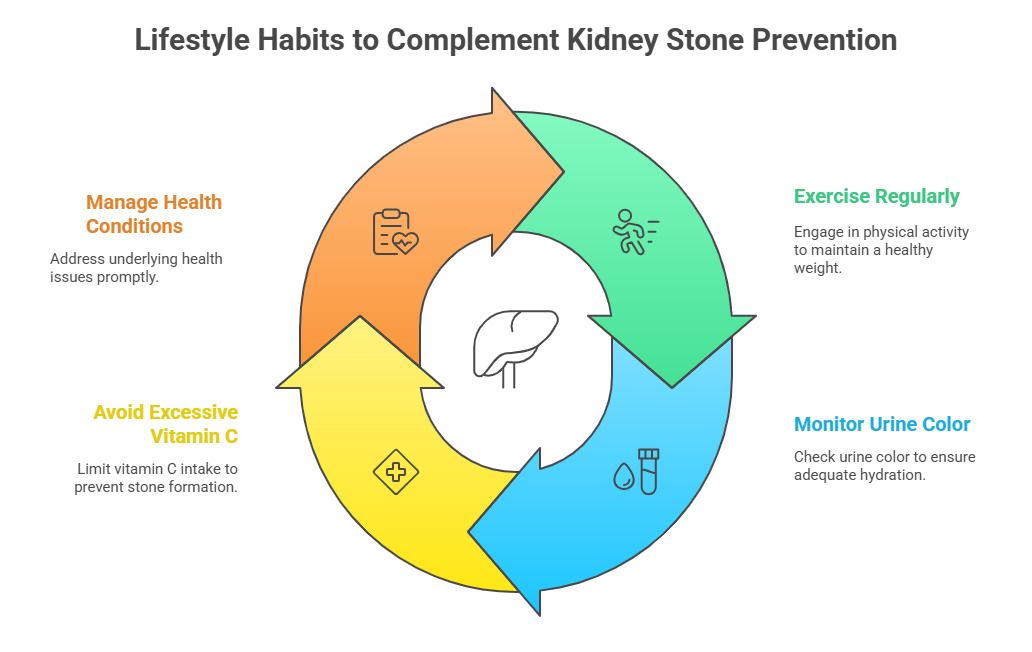
Lifestyle Interventions
Weight Management
Maintain BMI <25 to reduce stone risk
Regular Exercise
30 minutes daily, 5 days a week
Stress Reduction
Meditation, yoga, adequate sleep
Avoid Dehydration
Monitor urine color (pale yellow)
Temperature Control
Avoid excessive heat exposure
Regular Follow-up
Annual evaluations and monitoring
Long-term Monitoring & Follow-up Protocol
Prevention of kidney stones is a lifelong commitment. Our comprehensive follow-up protocol ensures that preventive measures remain effective and are adjusted as needed based on your response and changing health status.
Structured Follow-up Schedule:
-
Initial 3 Months: Monthly visits with urine analysis and dietary assessment
-
3-12 Months: Quarterly evaluations with metabolic testing
-
Annual Follow-up: Complete metabolic workup and imaging
-
Lifestyle Support: Regular nutritional counseling and lifestyle coaching
Success Metrics & Outcomes
Special Populations Requiring Intensive Prevention
Family History
Genetic predisposition requires early and aggressive prevention
Recurrent Formers
Multiple stone episodes need comprehensive metabolic evaluation
Chronic Kidney Disease
Stone prevention critical to preserve remaining renal function
Occupational Restrictions
Pilots, military require stone-free status for duty
Our Comprehensive Approach
At BLK Max Hospital, led by Dr. Shafiq Ahmed, we take a holistic approach to stone prevention. Our program combines:
- Advanced diagnostic testing
- Personalized dietary planning
- Medical therapy when indicated
- Regular monitoring and adjustment
- Patient education and support
- Long-term follow-up care
Commitment to Long-term Kidney Health
Preventing kidney stone recurrence requires expertise, commitment, and personalized care. At BLK Max Hospital, led by Dr. Shafiq Ahmed, we provide comprehensive stone assessment and prevention services that address the root causes of stone formation and implement evidence-based strategies for long-term success.
Scientific Approach
Evidence-based protocols and advanced diagnostic testing
Personalized Care
Customized prevention plans based on individual metabolic profiles
Continuous Support
Ongoing monitoring and adjustment of prevention strategies
Schedule Your Comprehensive Assessment Today
Contact us to start your personalized kidney stone prevention journey